


Explore your next steps
Your guide to singing lessons in Sunderland
Choose a starting point, explore your voice and make practice useful between lessons.
01
Choosing singing teachers and getting started
Begin with the voice you have
Your first lesson is a starting point, not a test of whether you deserve to sing. You might enjoy singing along at home, have experience in a choir or feel unsure about making a sound in front of someone else. Tell me what brought you to lessons and what you would like to change. A familiar song can give us something concrete to explore together. We can listen to a short passage, identify what already works and choose one thing to investigate, rather than trying to change everything at once.
Choose a useful first goal
A goal can be as simple as finishing a verse with more confidence or finding a comfortable way into a chorus. Other singers arrive with a performance, exam or audition in mind. The useful question is what would make the next few lessons meaningful to you. We can break a larger ambition into smaller tasks and return to it as your understanding develops. There is no fixed timetable that every voice must follow, and progress does not have to mean choosing a harder song at every lesson. Singing for fun is a worthwhile aim too: exploring your vocal potential does not need to lead to an exam or a stage career.
Bring your musical interests
Make a short list of songs you like, including something you know well and something you would like to explore. Listening to several versions can help you explain what draws you to the music: the storytelling, the rhythm, a particular phrase or the overall mood. You do not have to reproduce a recording exactly. We can consider whether the key and arrangement suit the work we are doing, while keeping the musical qualities that made you choose the song in the first place. Pop and light rock are particular interests in my teaching, alongside musical theatre, blues and jazz, so you can bring a broad range of ideas.
02
Songs and your singing style
Learn from a song in small sections
A complete song contains several different jobs. You are following the melody, keeping time, remembering words and communicating an idea. If a passage feels uncertain, we can separate those elements. You might speak the words in rhythm, listen carefully to an entry or work on the connection between two phrases before singing the whole section again. This gives you a practical way to investigate a difficulty. Listen for pitch, rhythm and tone separately before putting the phrase back together; a clear question is more useful than trying to improve every detail at once. It also helps us notice whether an exercise transfers into the actual song, which is the reason for doing it.
Explore different styles thoughtfully
Changing style is more than copying an accent or making your voice louder. Listen to how a singer places a phrase against the beat, shapes a word or leaves space before the next line. A musical theatre song may ask you to follow a character’s intention; a pop song may use a more conversational delivery. We can discuss those choices in relation to your interests and experience. Exploring a contrast can be useful, but you can also spend time developing the music you already enjoy.
Learning from a professional singer in the North East
I have performed in multiple musical ensembles, from a musical duo and trio to a four-piece band. My background spans rock, pop, blues, jazz and acoustic bands, with performances at corporate events, social clubs, restaurants and festivals. I have also sung Celine Dion and diva tribute material and released original music. These experiences give us practical examples to discuss: how a song changes with its accompaniment, how to communicate its story and how to prepare for a different setting. Over several years, I have performed in various shows and venues around the UK. Working across these genres has taught me to listen to the whole arrangement, not just my own part.
Make interpretation a personal choice
The words give you a useful route into interpretation. Ask who is speaking, what they want to say and where the thought changes. Try speaking a line naturally before deciding how to sing it. There can be several convincing versions, so we can compare choices rather than searching for one correct imitation. A clear intention often gives a performance more direction than adding extra decoration. As you become familiar with the song, we can connect those choices across a verse or chorus so the performance feels coherent.
03
Practice and online lessons
Learn online or meet in person
Online lessons let you work from home without travelling to Whitburn. Choose a quiet space, check your connection and sound, and keep your song materials within reach. In-person singing lessons give us a shared space to listen and respond directly. Both formats need focused practice between sessions; tell me about your setup and usual availability so we can discuss which arrangement suits you.
Give each practice session a purpose
Choose one task you can describe clearly: finding a particular entry, keeping a phrase in time or remembering a section without looking at the words. Begin with the approach we have discussed in the lesson and listen to the result. If it is not working, note what you tried instead of simply repeating it more forcefully. A small amount of attentive work can give us better information than a long session without a clear focus. Your practice should fit realistically into your week and leave room for questions. If you choose to learn online, note any practical question about your home setup as well as the musical task, so we can make the next session easier to follow. Test how you will hear accompaniment and keep your agreed song materials nearby.
Use recordings as a learning aid
If you choose to make a short recording of your own practice, listen for the task you were working on rather than judging every detail of your voice. Compare two attempts at the same passage and describe one difference. You might notice that an opening is more settled or that the words are clearer. Keep recordings private unless you have permission from anyone else included. They can help you remember your starting point, but you do not need special recording equipment to begin singing lessons.
Connect listening with musical understanding
Theory becomes more useful when it answers a question you have about a song. We can discuss rhythm, melodic patterns and the shape of a phrase in practical terms, then return to singing. Try following the pulse while listening or identifying where a repeated section changes. You do not need to master written notation before enjoying music, and different learners find different explanations helpful. Tell me when an instruction is unclear so we can approach the idea another way and make the next practice task understandable.
04
Performance opportunities and progress
Build a performance in manageable steps
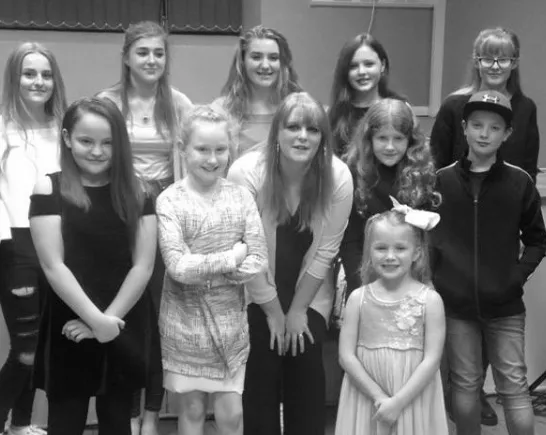
Preparing to sing for someone else involves more than learning the notes. You can practise how you begin, where you look and how you continue after a small mistake. Start with a short section and a clear purpose. We can discuss the demands of your intended setting, whether that is a family occasion, an audition or a more informal performance. Sharing music is optional, and lessons can remain a private activity. The aim is to make preparation useful to your situation rather than to impose a public performance deadline. My students have taken part in showcases. Ask about current performance opportunities rather than assuming that an old event announcement is an upcoming date; taking part remains optional.
Decide whether an exam suits your goals
Some singers enjoy the structure of an examination; others prefer to develop a repertoire without taking grades. Neither choice makes your learning less worthwhile. If you are interested in an exam, we can discuss the relevant material, preparation and practical arrangements before you enter. An exam fee and a lesson fee are separate matters to confirm. A grade can provide a milestone, but it is not the only way to recognise progress in listening, interpretation or confidence with familiar music. I offer preparation for Rockschool, ABRSM and Trinity College examinations.
Review what has changed
Return occasionally to a song or passage you worked on earlier. Ask what feels more familiar, what you can now explain and what still needs attention. A useful review includes your experience of learning, not just the difficulty of the repertoire. You may find you can practise more independently or hear a detail that previously passed unnoticed. Bring those observations to lessons so we can choose the next focus together. To enquire, send your age, experience, musical interests and preferred times; we can then discuss a suitable first session. After a few weeks, a short practice note can help you describe changes without expecting a fixed rate of improvement.
Connect your lessons with local music
Listening to live music can give you new ideas about phrasing, communication and working with other musicians. Explore our local venue guide and listening guide to local artists, then bring a musical question to your next lesson. If you need equipment or plan to record, the music shop guide and recording and rehearsal guide explain what to ask before spending money. These are independent resources, not services included in your lesson fee. For tuition arrangements, read the lesson prices and FAQs.